Exploring Inter-Game Reward Migration Strategies in Tiered Digital Casino Memberships
Written by Freya Schmid · Sep 27, 2026

Exploring Inter-Game Reward Migration Strategies in Tiered Digital Casino Memberships
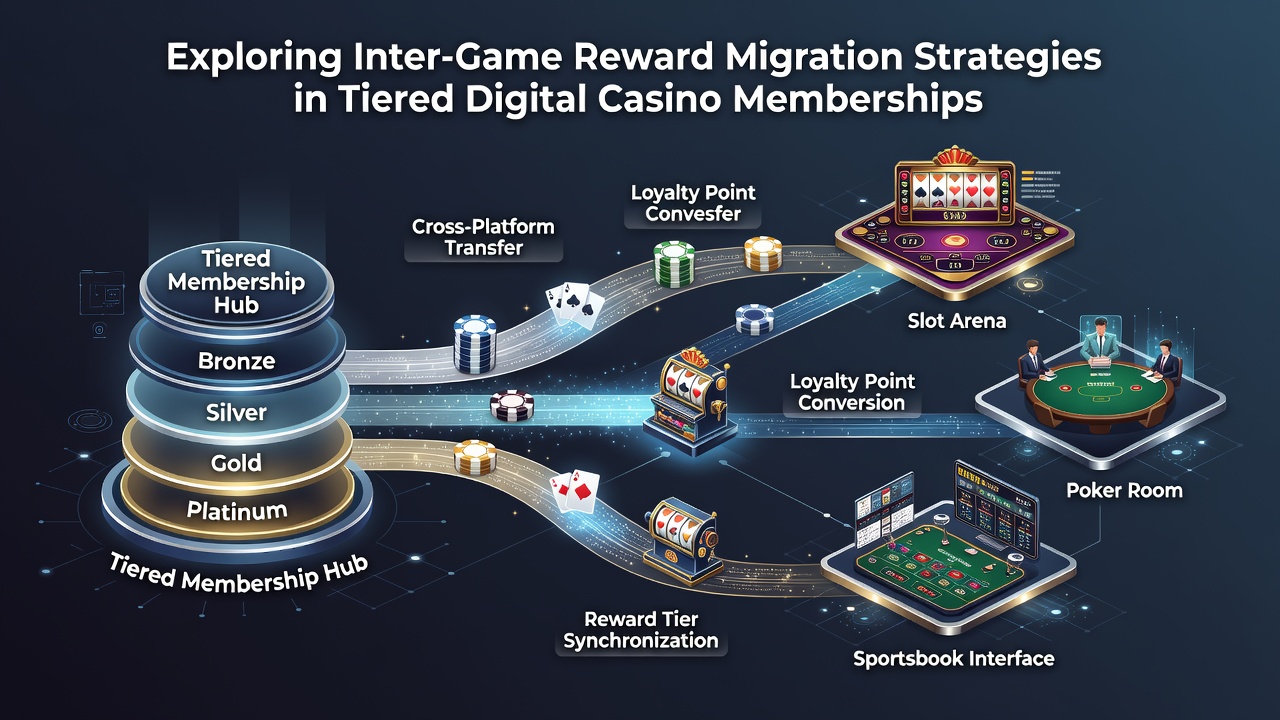
Digital casino platforms structure their membership tiers around accumulated points that players earn across multiple game categories, and inter-game reward migration allows those points to shift between reel-based and card-based activities without resetting progress toward higher status levels. Operators design these systems so that activity in one vertical contributes to overall tier advancement while also unlocking specific perks that apply elsewhere in the ecosystem.
Core Mechanics Behind Point Transfer Systems
Most tiered programs calculate base points at different rates depending on the game type, yet migration rules permit conversion ratios that move value from high-volume slots sessions into table game credits or vice versa. Data from platform operators indicates that conversion typically occurs at set multipliers, such as three slot points equaling one table game point, while maintaining the original earning date for expiration calculations. This structure prevents players from losing momentum when they switch activities, and it encourages longer engagement periods across the full range of available titles.
September 2026 brought updates to several major mobile platforms that refined these conversion tables in response to regulatory reviews in multiple jurisdictions. Those changes standardized disclosure requirements for migration fees and clarified how partial point balances carry over during tier reevaluations, which occur quarterly for most programs.
Player Approaches to Maximizing Cross-Game Value
Observers note that experienced participants often map their weekly play patterns to align with migration windows, completing required slot volume early in a cycle before shifting focus to live dealer tables where higher per-hand rewards apply. One documented case involved a mid-tier member who moved accumulated reel points into blackjack buy-in credits, thereby meeting table minimums without additional deposits while preserving the original points for future tier calculations. Such sequences rely on understanding the exact timing of point posting and the platform's daily reset schedules.
Research from industry analysts shows that platforms offering seamless migration see higher retention rates in the upper tiers, because players avoid the friction of starting from zero in a new game category. Figures reveal that average session lengths increase when transfer options include both automated and manual confirmation steps, giving users control over when the shift occurs.
Regulatory and Platform Variations Across Regions
Canadian provincial regulators require operators to publish migration formulas in plain language within account dashboards, a rule that took full effect in early 2025 and continues to shape how new programs launch. Similar transparency measures appear in Australian state frameworks, where operators must demonstrate that migrated points retain equivalent monetary value to prevent unintended dilution of player balances. These standards differ from U.S. state approaches, which focus more on audit trails for point movements between game servers.
According to reports issued by the Nevada Gaming Control Board, migration activity accounted for roughly 18 percent of all point redemptions tracked in 2025, with the majority flowing from automated reels to virtual card tables. European operators under Malta Gaming Authority oversight report comparable percentages, though their systems more frequently incorporate time-limited multipliers that accelerate transfers during promotional windows.
Technical Implementation and Data Tracking
Backend systems log every migration event with timestamps, originating game category, and destination application, allowing operators to analyze which sequences produce sustained play. These records also feed into anti-money-laundering monitoring, because rapid back-and-forth transfers can flag unusual patterns. Platforms that integrate real-time dashboards let members preview the exact point totals they will receive after a proposed transfer, reducing support tickets and improving user confidence in the process.
Academic studies from institutions examining digital gambling behaviors have tracked how migration features influence game selection over multi-week periods. Results indicate that members who utilize transfers at least twice per month reach the next tier approximately 22 percent faster than those who remain within a single game vertical, though the studies emphasize that individual outcomes depend on the specific conversion rates each operator sets.
Conclusion
Inter-game reward migration has become a standard feature in tiered digital casino memberships because it connects disparate game types into a single progression path. Platform updates scheduled for late 2026 aim to further standardize reporting across borders, while existing data from regulatory bodies and research groups continues to shape how operators refine their transfer mechanics. Players who understand the timing, ratios, and disclosure rules can navigate these systems methodically, using point movement as one component of broader engagement strategies rather than an isolated tactic.